

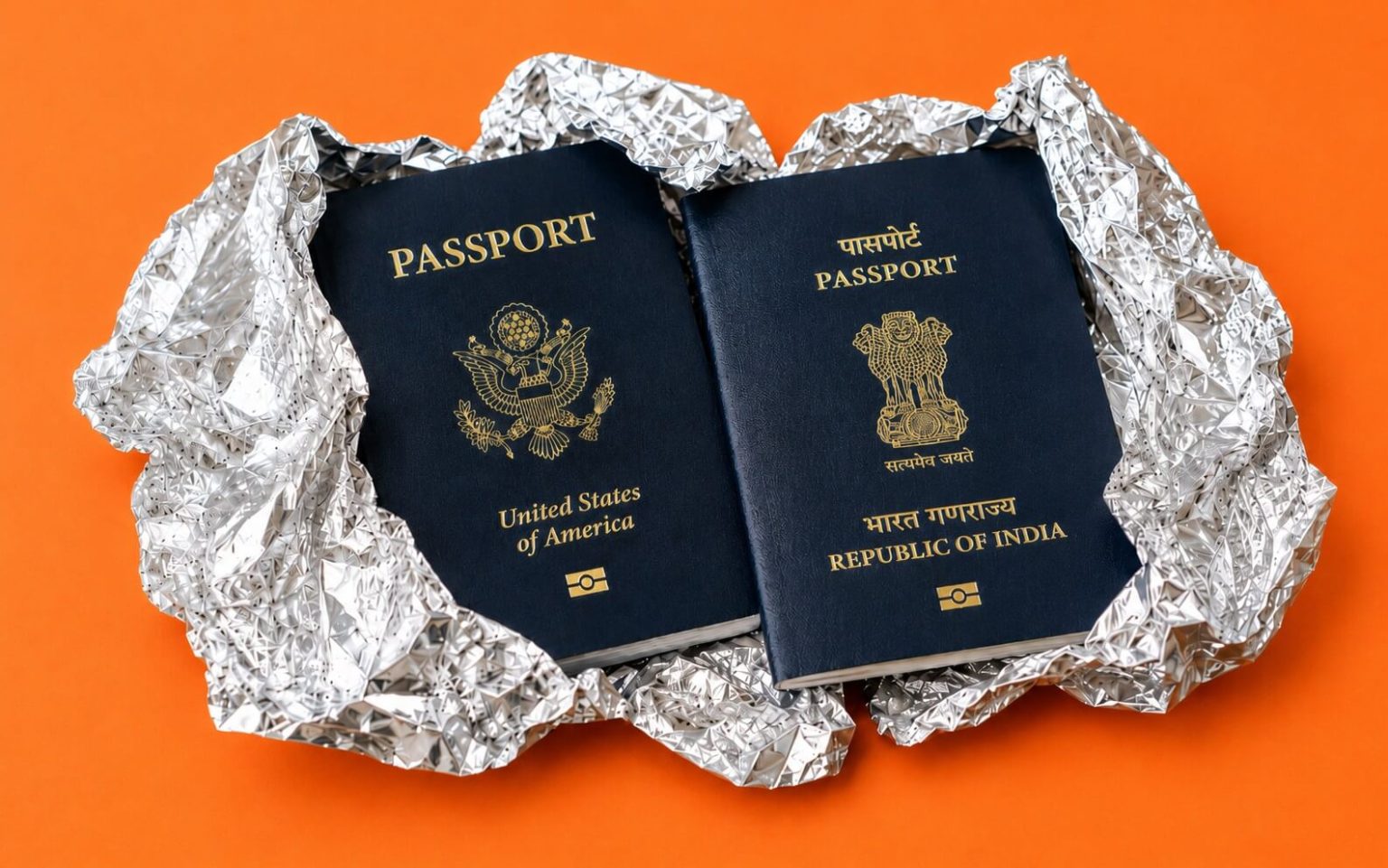
With the faster adoption of biometrics technology from passport to e-gate boarding to immigration, travelers’ data privacy risks are multiplying. Driven by fears of personal data theft from passports, US and Indian travelers are resorting to popular security hacks, like using aluminum foil to cover the passport booklet and protect the data embedded in it. Recently, wrapping electronic passports in aluminum foil has become a viral trend.
But the question is – do you really need a kitchen staple to secure your e-passport? Let’s decode how it works.
What data US Passport’s RFID chip contains
The back cover of America’s Next Generation Passports (NGP) has a small RFID chip embedded close to the spine. The US started issuing Next Generation Passports with stronger security features and better durability in 2022. The RFID chip contains the traveler’s name, date of birth, passport number, biometric data, a digital copy of the photo, and a cryptographic signature that helps CBP officers check whether the passport is tampered.
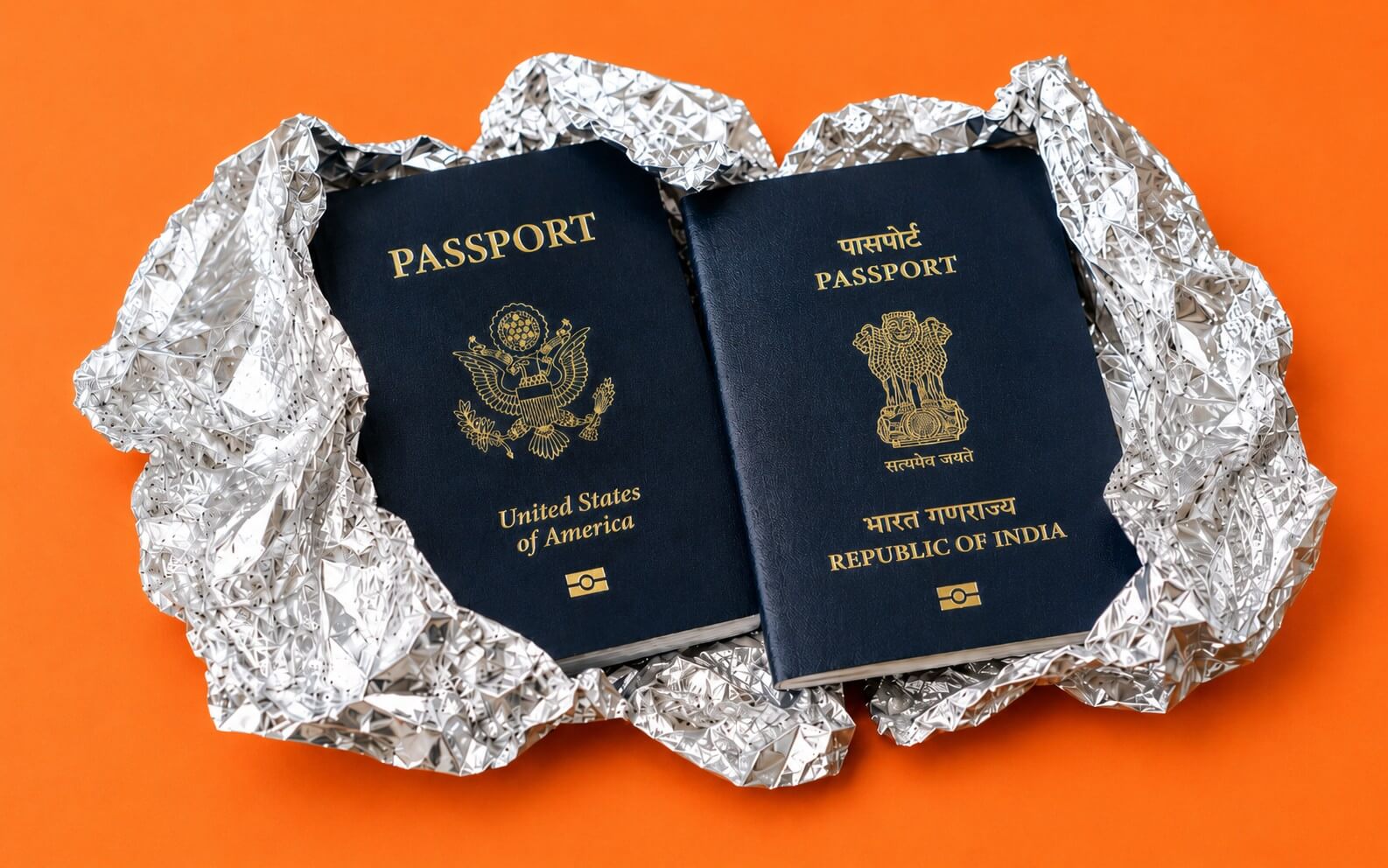
How aluminum foil works as a passport security trick
Basically, the US Passport’s RFID chip is passive unless an electronic reader in the close vicinity transmits a radio signal, turns the chip on, and reads the data. A regular (hidden) RF reader or scanner can read the chip within the range of 6 inches, according to cybersecurity experts. Such claims have popularized the use of aluminum foil to cover passports during busy travel times since 2022.
Aluminum foil covering works like a Faraday cage – a metal-like conductive material that blocks and absorbs electromagnetic waves (radio signals) to prevent unauthorized remote scanning of passport chips in crowded parts of busy airports, like baggage check-in, security checkpoints, and boarding areas. Many US citizens claim that the Faraday cage like tricks help them travel smart with their passport details and biometric data safe from secret reading.
US Passport security features vs aluminum foil covering
There are counterarguments that such no-brainer DIY hacks as aluminum foil are absolutely unnecessary given the advanced security features of USA’s Next Generation e-Passport. Since the RFID chip is embedded inside the booklet, it does not respond to radio signals from nearby RFID readers when the passport book is fully closed. Those familiar with the mechanism of electronic passports don’t espouse the trend of wrapping passport booklets in a piece of aluminum foil, because no radio transmissions can get through the cover alone.
The logic of using aluminum foil is also countered with the view that the US Passport’s RFID chip is locked behind a cryptographic protocol – Basic Access Control – to protect the data even if your passport is open and close to a hacker in a public place. Unlike Apple AirTag or other tracking devices, the passport chip does not provide live location data.
To use or not to use kitchen foil: Facts
“Aluminum foil covering has disadvantages that viral reels don’t show. This kitchen staple is the cheapest instant hack but not a fool-proof solution to e-passport holders’ fears of data theft. The reckless use of aluminum foil can rub against certain areas of the passport booklet and, thus, it can scratch sensitive features. Any damage will render your valid passport invalid for travel. Besides, aluminum foil is usually thin and tearable,” said Sourav Agarwal, Senior Editor of Travel Beats, the Indian Eagle blog for international travel news and guides.







The US Passport has enough security features. I feel quite comfortable with the passport as is.
The use of the aluminum foil as a protection depicts nothing more than a desi dehaati, half literate mindset.