

Is it safe to travel to India via the Middle East at this point? My flight with Qatar Airways is nearing this month. Since I will travel with a 5-year-old, I am concerned whether transit at Doha is safe and smooth. Should I cancel the booking? Please advise and share your experience if you travelled via the Middle East very recently.
“Travelers from the US and India are scouring the Internet for some confidence as they are looking to fly through the Gulf region amid immoderate fare increases by European and other airlines. We are seeing such posts on social media and receiving similar queries from our customers every other day. Despite the declining West Asia conflict, safety concerns do still loom large over people’s plans to fly with Gulf airlines,” said the chief customer relations officer of IndianEagle.com.
Be it Emirates, Etihad, or Qatar Airways, you better not cancel your travel booking unless the airline cancels the flight. In case you don’t feel like traveling now, check the Middle East airlines’ flexible rebooking options. Qatar Airways is looking to rebook travel through 31 October 2026 for those who have their flights scheduled until 15 June 2026. Poornima Setti, one of our loyal customers, shares her recent experience of flying to India via the Middle East.
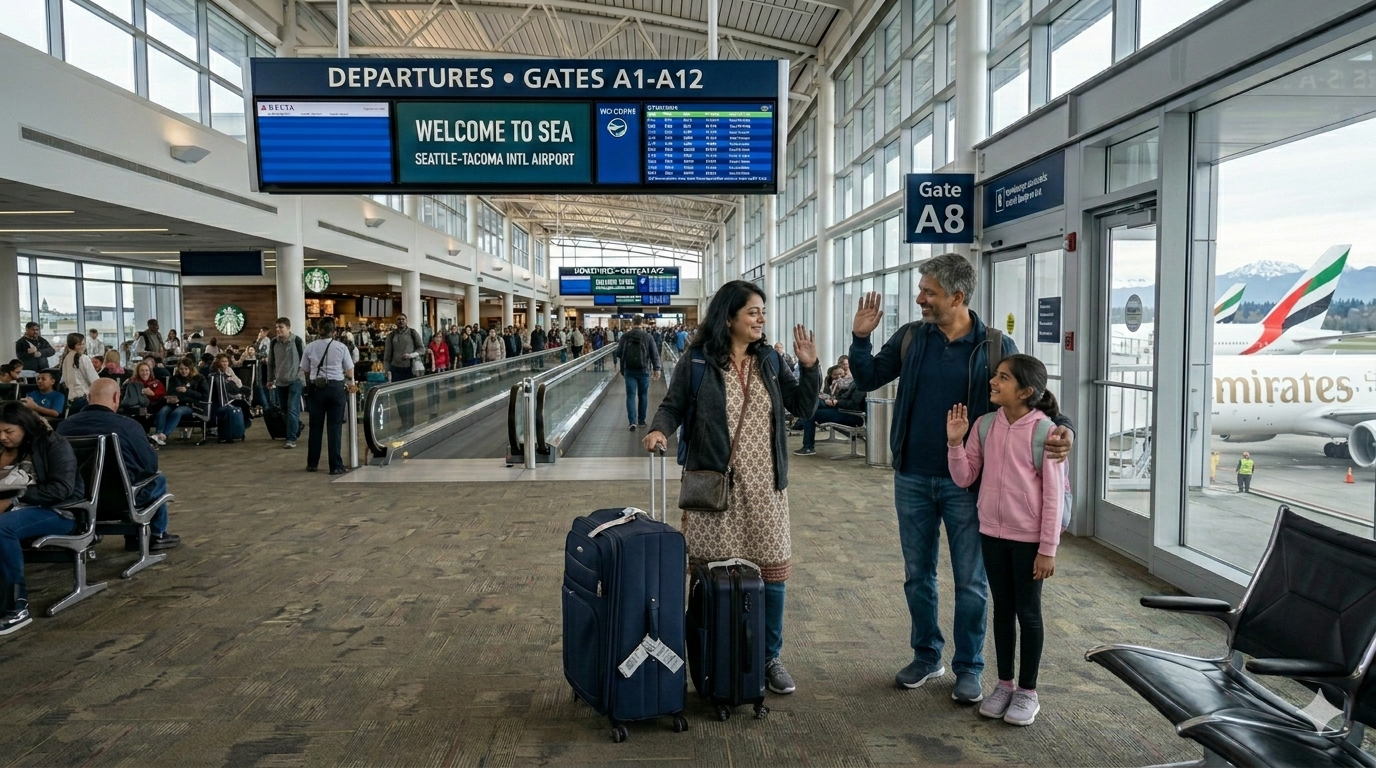
To travel or not to travel via Dubai? After a few days of deliberation, I decided not to cancel my pre-booked trip with Emirates, from Seattle to Bengaluru. If the airline had involuntarily cancelled the flight in the eleventh hour, I would have postponed the trip. I checked the PNR status with my travel agency, Indian Eagle, and on the airline’s website for consecutive five days, it showed active. I made up my mind, packed my bags, and kept the documents ready.
In fact, I wanted this trip since my father is not keeping well these days. Some people from our social circles in Bellevue reported safe travel via Doha and Abu Dhabi in recent days. It boosted my confidence somewhat. Besides, Indian Eagle’s customer support assured me of flexible rebooking or refund in case of voluntary or involuntary cancellation. With a mix of courage and concern, my travel started.
At Seattle-Tacoma Airport, my husband and daughter accompanied me through security to the boarding area for Emirates flights. They got the SEA Visitor Pass within 4 days prior to my departure. Seattle International Airport’s visitor pass program lets non-ticketed individuals to go past TSA security and see off their traveling family or friends at the boarding gate. Here is how you can get SEA Airport Visitor Pass.
The airport check-in and boarding were smooth, but the TSA security line was a little longer than usual. Emirates’ cabin crew were all smiles. Once boarding was over, the passengers were served the signature welcome drink and given amenity kits in Premium Economy. Even in uncertain times, their composed manners and professional service are just impressive, as if nothing happened in the Middle East. It gave me goosebumps as well as assurance.
I packed some ready-to-eat food stuff in my carry-on bag apprehending if the layover would extend at Dubai Airport. My itinerary had a 3.5-hour layover. The airport ambience was normal though the hustle and bustle of DXB, the world’s second busiest airport, was missing. Anxiety was palpable in the whispers and faces of transit travelers around me. The media pictures of the airport where tens of planes were grounded and thousands of travelers got stranded when the West Asia conflict broke out flashed on my mind for a moment.
Thanks to the airport and its staff being resilient enough to keep the operations normal. Surprisingly, there was no lapse in the ground services at the airport. Only the retail space was half open in the international transit area. I had smooth connection though the connecting flight somewhat late. The moment the flight to Bengaluru was mid-air, the passengers heaved a sigh of relief.
Disclaimer: Poornima Setti, among our loyal customers, shared her honest experience on request. The story is edited and titled as per our in-house editorial policy, while the core information remains unchanged.

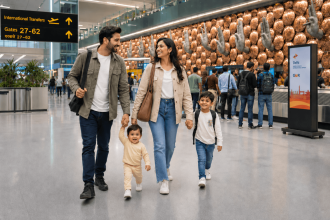
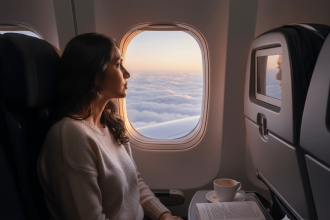
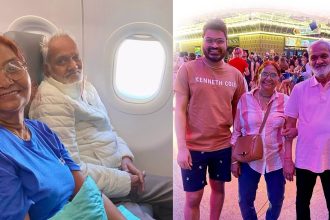
I had my Qatar Airways flight cancelled hence I booked on Etihad from Washington DC to Mumbai. Date was 3rd April.
Total time to get boarding pass and clear security,( I have Global pass ) was less than 30 minutes.
Ethihad has beautiful new aircraft which was very very comfortable, Their 4K big screen is just awesome and food is OK but plenty available if you need it.
Cabin crew is awesome.
I can say with 100% truth that I found Etihad way better than Emirates.
When we reached Abu Dhabi, the airspace was closed and the anxiety was definitely there for me , expecting a drone or missile and the next thing would be , can’t imagine.
Pilot announcement was awesome, he said there was enough fuel to circle and we went through two big circles of half hour each, then the airspace opened and we landed very smoothly.
Connecting flight was on time and although it departed a bit late but reached Mumbai on time.
Overall great experience with Etihad.
I had my new house opening on 19th which is Akshay Tritiya hence the risk I took, but I send my wife via Lufthansa through a different and safe route.
Didn’t want both to die together.