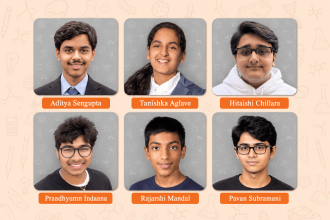

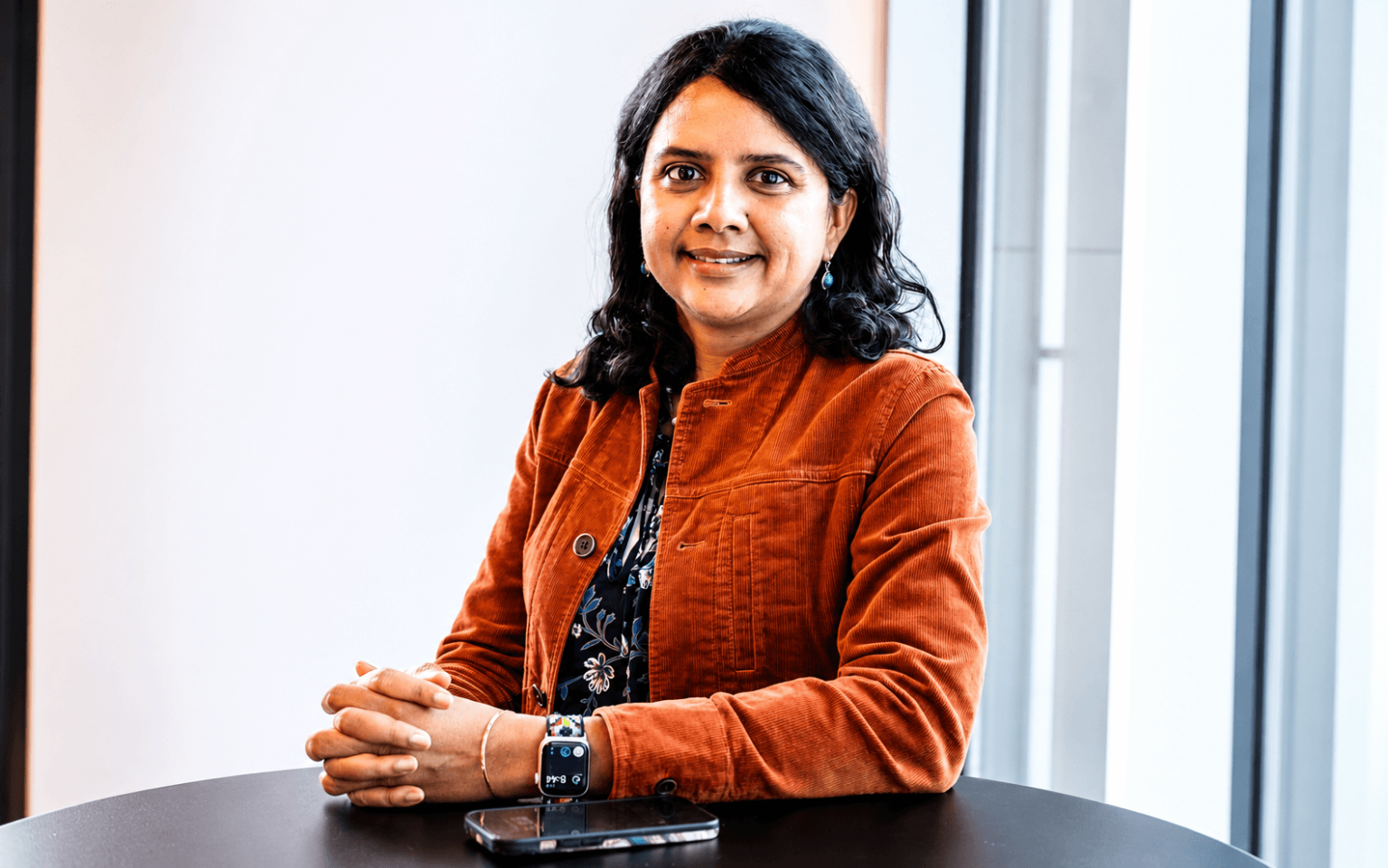
The US has more Indian-origin women scientists than Indian American CEOs. Just days after five Indian-origin girls reached the finals of America’s Top Young Scientist Challenge 2026, computer scientist Sunita Chandrasekaran is making headlines and grabbing global attention. She is leading one of the nice research teams to prepare Discovery, America’s fastest and most powerful next-gen, AI-powered supercomputer, for its launch in 2029. Precisely, Indian-origin STEM talents are taking the bull by the horns in AI technology.
Who is Sunita Chandrasekaran in USA?
Indian American Sunita Chandrasekaran is a computer scientist and a leading expert in artificial intelligence as well as high performance computing. She is an Associate Professor in the Department of Computer and Information Sciences at the University of Delaware, where she also serves as the Director of the First State AI Institute and holds the David L. and Beverly J.C. Mills Career Development Chair.
Born and raised in Chennai, Sunita earned her Bachelor’s degree in Electrical and Electronics Engineering from Anna University in 2005. Her interest in advanced computing took her to Nanyang Technological University (NTU), Singapore, where she completed her PhD in 2012. She later moved to the USA for postdoctoral research at the University of Houston and became one of America’s leading researchers in scientific computing.
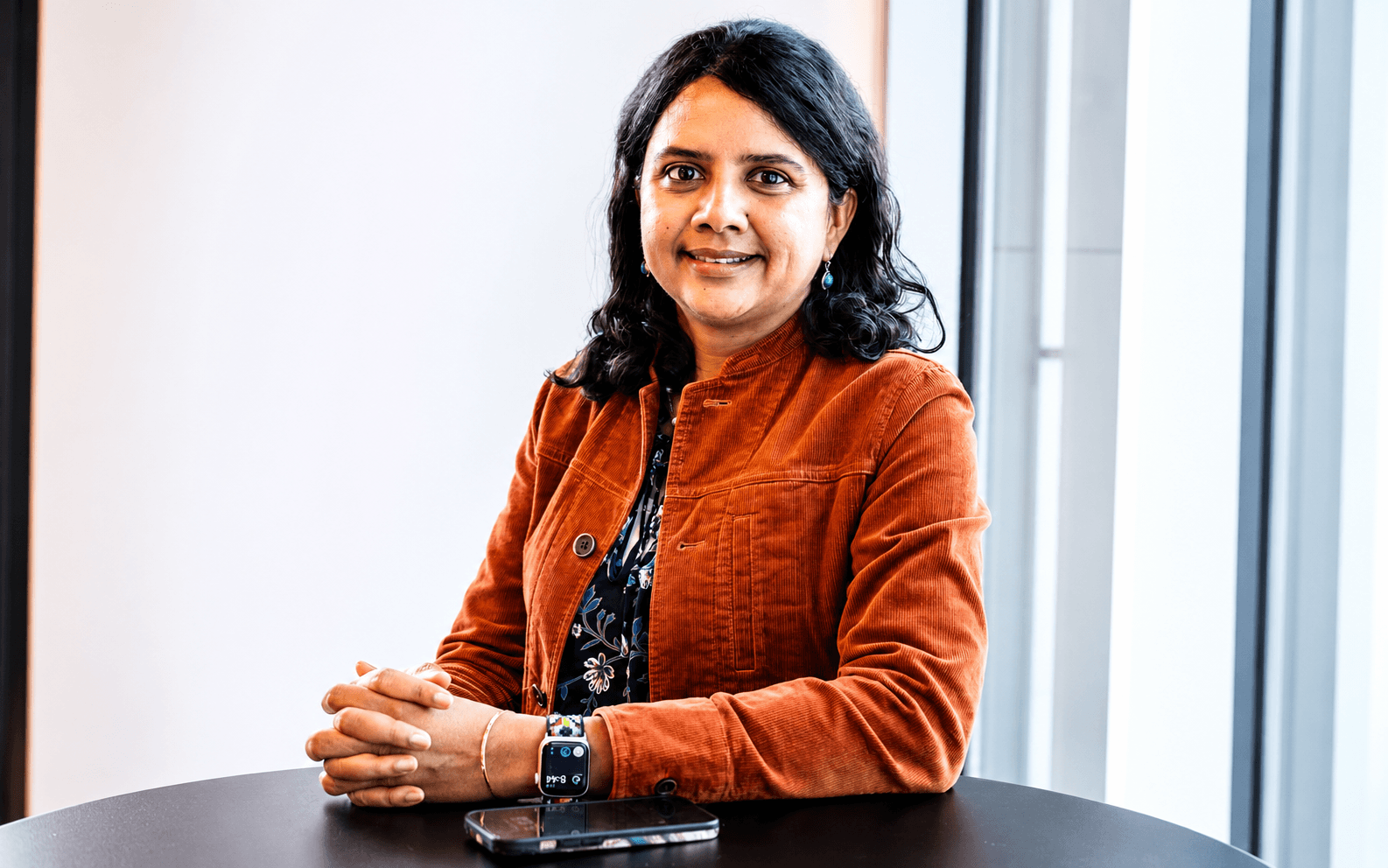
Over the years, Sunita has helped develop software that allows some of the world’s fastest supercomputers to solve more complex problems. Her research supports scientists working in areas such as clean energy, climate science, healthcare, manufacturing, and space research. In 2024, she received a $4.7 million grant from the US National Science Foundation (NSF) under its SCIPE program to build a computational and data intensive research workforce and network in the Mid-Atlantic region.
Sunita serves on the US Department of Energy’s Advanced Scientific Computing Advisory Committee (ASCAC). She is Vice Chair of the Delaware AI Commission, and a Board Member of the OpenACC Organization, which develops programming standards for modern supercomputers. In 2025, she received the ACM Emerging Woman Leader in Technical Computing Award, recognizing her leadership in high performance computing.
It is this combination of research, leadership, and experience that has earned Sunita a place among the select scientists preparing America’s next generation supercomputer, Discovery.
What is Discovery Supercomputer?
Discovery is the US Department of Energy’s (DOE) next flagship supercomputer, being developed at Oak Ridge National Laboratory (ORNL) in Tennessee under the Genesis Mission. Once operational, it will succeed Frontier, the world’s first exascale supercomputer. It is being built by Hewlett Packard Enterprise (HPE) in partnership with AMD and is expected to be operational by 2029.
America’s Discovery Supercomputer is expected to outperform a billion people’s decades-long combined work with its calculations in a single second. The project is part of a $1 billion public-private partnership involving the DOE, HPE, AMD, and other technology partners. Unlike traditional supercomputers, Discovery will combine AI, high performance computing, large-scale scientific simulations, and future quantum technologies into a single platform to accelerate scientific researches.
Discovery will be used by researchers in US national laboratories, universities, government agencies, and industry partners to tackle some of the world’s most complex scientific challenges. Its applications will span fusion energy, climate modelling, drug invention, advanced manufacturing, materials science, space research, and national security.
The US government selected nine research teams from across the country to participate in the Discovery Center for Accelerated Application Readiness (CAAR) program. These teams will collaborate and prepare the software that scientists across the world will eventually use on the upcoming fastest supercomputer, Discovery.
Sunita Chandrasekaran’s role in Discovery Supercomputer
Sunita will lead the University of Delaware team in preparing PIConGPU, a powerful software that simulates the behavior of charged particles under extreme conditions. The research could help scientists improve fusion energy, a clean energy technology that many believe could transform the future of electricity generation. It also has applications in spacecraft propulsion, astrophysics, and laser-based medical technologies.
But the team’s job goes far beyond running simulations. “Our goal is to run thousands of experiments across many different physics scenarios and see what breaks, whether it’s software bugs, performance bottlenecks or system issues under stress,” Chandrasekaran said. “That’s where we learn, and where our team can help fix problems in real time, working directly with the system’s builders,” before the system is made available to researchers.
Another Indian American contributing to the project is Nikhil Rao, a doctoral student in computer science at the University of Delaware. He is developing AI workflows that process enormous simulation data directly in memory instead of storing it, an important step because Discovery’s simulations could generate data at petabyte per second speeds.