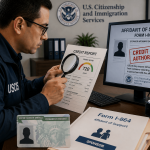

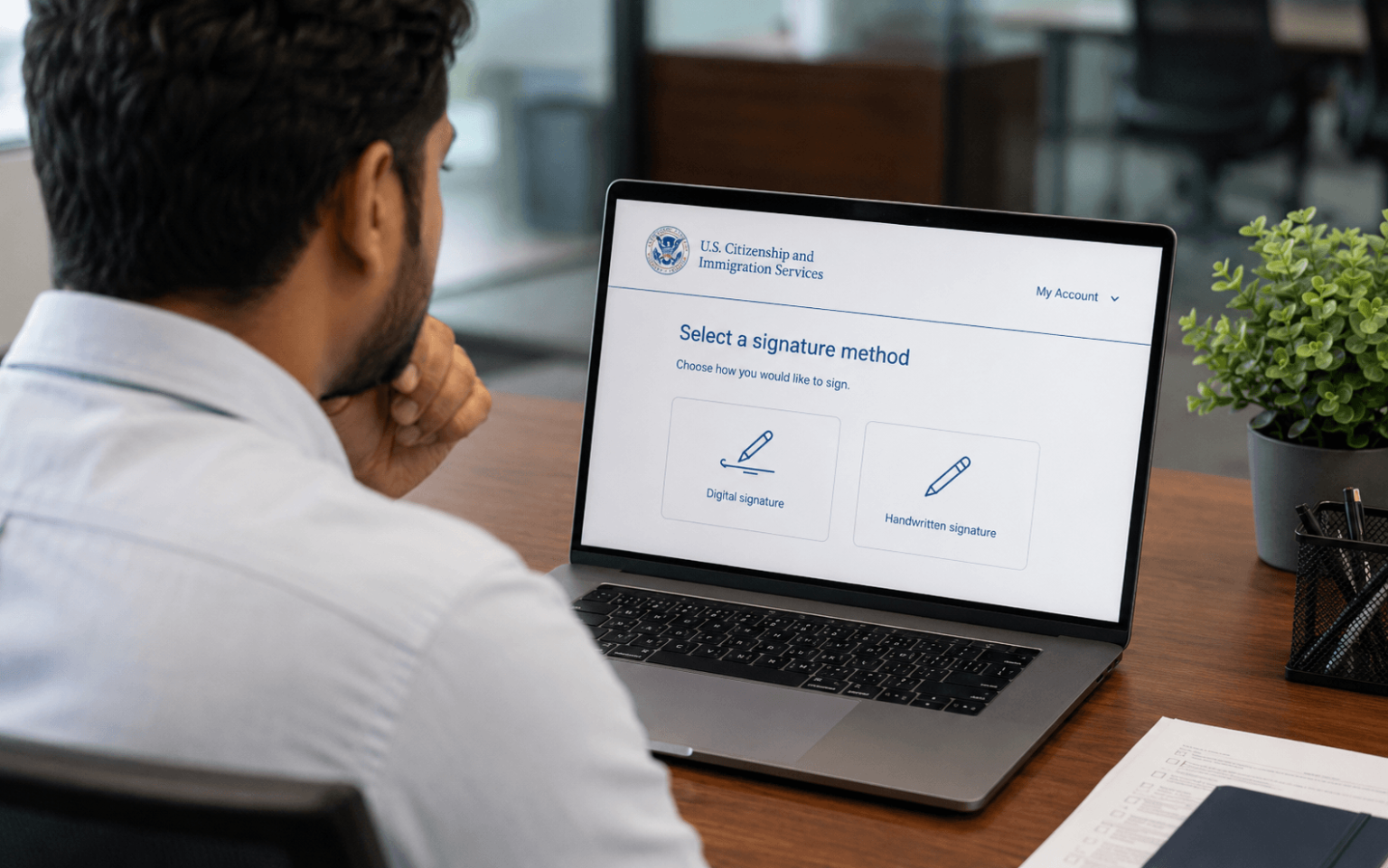
After having updated the immigrant photo validity rules in December 2025, the Department of Homeland Security is tightening the signature rules for USCIS forms for H1B visa, Green Card, work permit, status adjustment/extension, etc. Under the new USCIS signature rules 2026, your signature can make or break your US visa application or immigration filing. The latest USCIS update has already raised concerns among US employers, immigrants, and visa applicants because filing fees will not be refunded in most cases.
What is the new USCIS signature rule?
The new US visa signature rule for H-1B, Green Card, and other immigration filings was introduced by the US Department of Homeland Security through an interim final rule that will take effect on 10 July 2026. Earlier, unsigned or incorrect forms were usually rejected during the intake stage and returned for correction. Now, USCIS officers have broader authority to deny an application later during adjudication if the signature is found invalid.
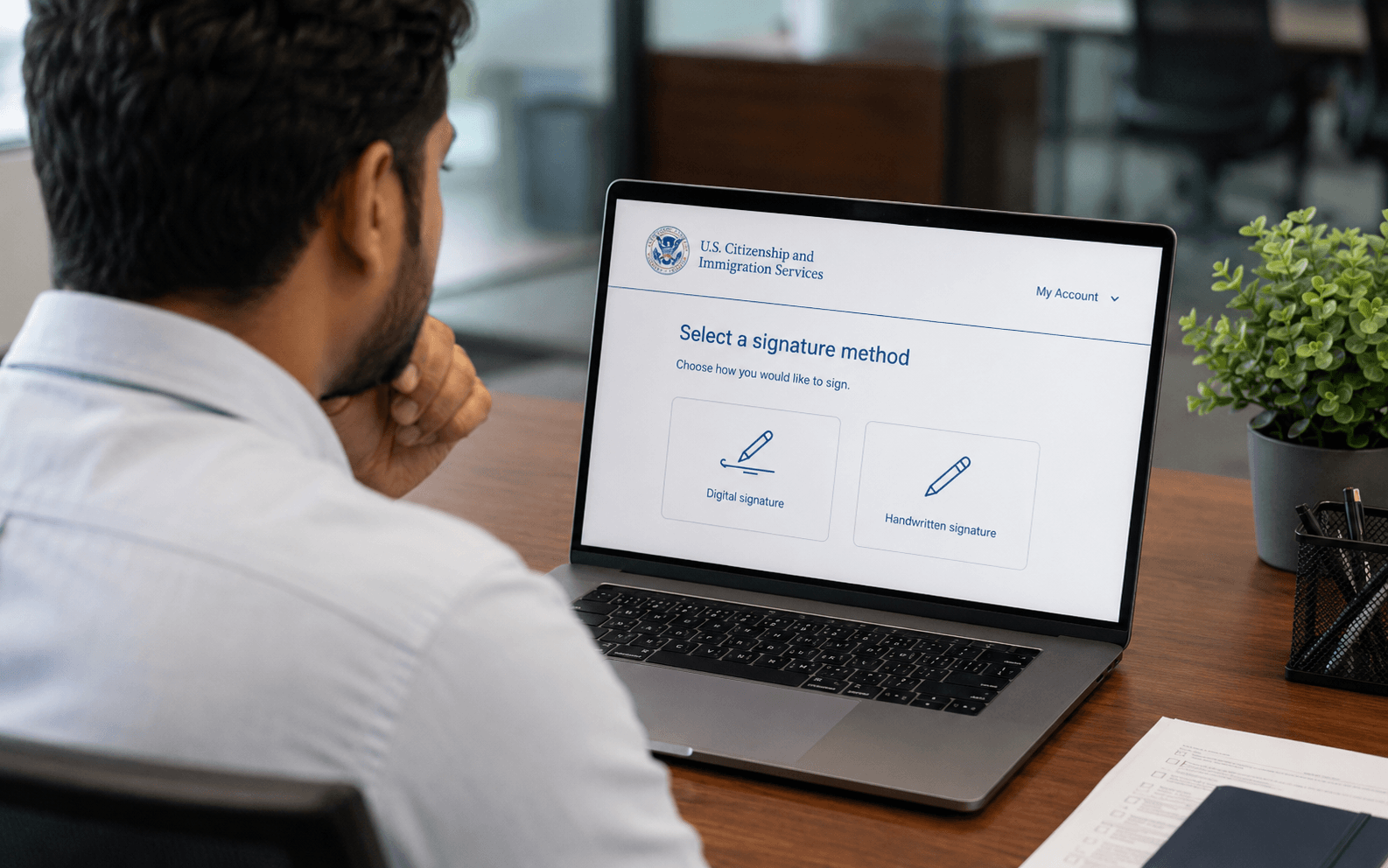
This means your case could stay under review for months before being denied because of a signature issue. USCIS says the updated policy is intended to improve filing integrity and reduce fraudulent submissions.
List of USCIS-approved signatures for US visa and immigration
USCIS still accepts traditional handwritten (wet-ink) signatures for most paper filings. The existing immigrants, new applicants, and employers are being advised to carefully follow the updated signature guidelines before submission. The valid ways to sign USCIS forms are:
- Original handwritten signatures
- Clear scanned copies of wet-ink signatures
- Faxed or photocopied signatures in some cases
- Electronic signatures only where officially permitted by USCIS
What signatures are invalid and unacceptable to USCIS in 2026
The latest USCIS update clearly states that questionable, copied, or improperly generated signatures will not be approved starting 10 July 2026.
- Typewritten names instead of hand-written signatures
- Copy-pasted signatures
- Software-generated signature images
- Virtually created signature images
- Signatures by unauthorized individuals
- Poor-quality scanned signature
- Signature stamps in paper filings
USCIS’ new signature policy to impact the following
The latest update applies to US visa and immigration processes, including
- H-1B visa petitions
- Employment-based Green Card applications
- Adjustment of Status filings
- Work permit applications
- Change or extension of status requests
- Family-sponsored immigration petitions
Forms like I-129 and I-485 are among the most important documents affected by the new visa application signature policy.
How it affects US immigrants and H1B visa applicants
The likelihood of approval delay or rejection increases even after the USCIS accepts a filing, under the new signature rule in 2026. It would significantly affect Indian-origin H1B Visa and Green Card holders/applicants, as they make up the largest group in the employment-based US immigration category. Many H-1B and Green Card filings involve remote signing between applicants, employers, and immigration attorneys, leaving space for signature-related errors.
As per the USCIS update, even a small issue in signature could lead to approval delay, loss of filing fees, rejection (in the worst case), and additional stress for Indians who are currently facing long Green Card backlogs and visa processing timelines.