
Effective 12 December 2025, the US Citizenship and Immigration Services has tightened how photographs are used for immigration records, signaling a wider push toward stronger identity verification and fraud prevention in the system. The USCIS limits the age of a foreign national’s photo that can be used to create immigration documents to no more than three years.
Photo rules for international travel and immigration are changing fast, especially for Indians living overseas. Indian missions have also been enforcing the new ICAO passport photo rules for NRIs since 1 December 2025. For Indians applying for passport renewal or a new passport outside India, even a minor oversight in compliance to the passport photo guidelines can now lead to rejection.
What is the new USCIS photo policy for immigrants
Under the new USCIS photo policy, the agency will only reuse a previously captured photo if it was taken within the last three years. If your photo on record is older than 36 months, USCIS will not use it to issue immigration documents.
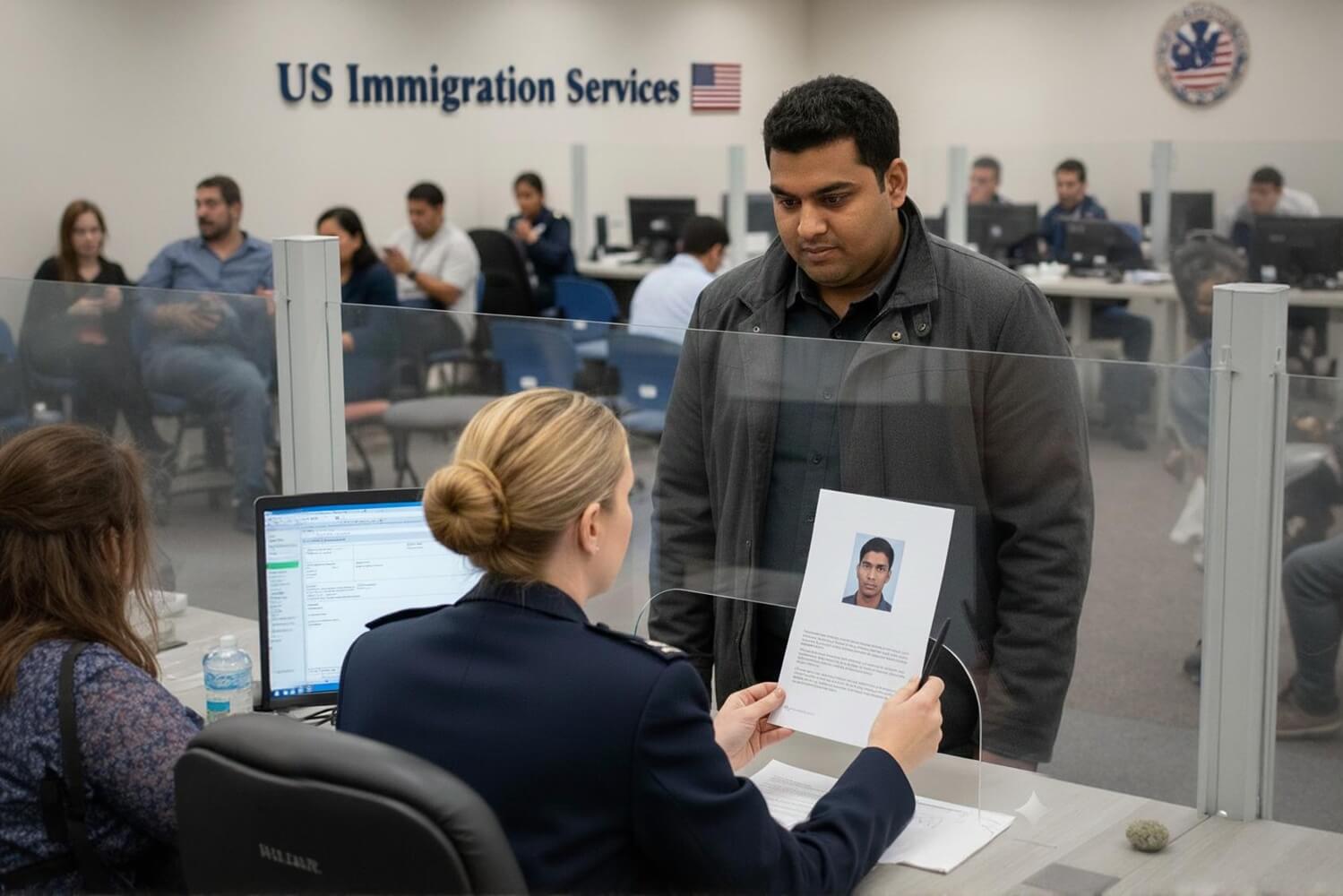
Another key change is that self-submitted photos are no longer acceptable. You cannot upload or mail your own photographs for immigration forms. Only photos taken by USCIS or authorized biometric service providers will be used for identity verification.
Why USCIS updated the photo rules
Before the COVID-19 pandemic, USCIS allowed photos up to 10 years old to be reused for certain applications that did not require new biometrics. During the pandemic, the agency temporarily allowed even older photos to be used to reduce in-person visits. In some cases, documents were issued using photos as old as 22 years.
After the pandemic, USCIS returned to the 10-year limit. However, the agency later decided that this timeframe was still too long and has now shortened the photo reuse limit to three years. USCIS says recent photos are essential for accurate identity verification. The updated policy strengthens security, improves record accuracy, and helps prevent identity fraud across the immigration system.
Who is affected by the new USCIS photo rules
The new photo policy applies to all immigrants and non-immigrants, regardless of nationality. Indian applicants are fully covered under this rule, with no exceptions. Some immigration forms do already require a new photo every time because a biometric appointment is mandatory. These include:
- Form I 90, Application to Replace Permanent Resident Card
- Form I 485, Application to Register Permanent Residence or Adjust Status
- Form N 400, Application for Naturalization
- Form N 600, Application for Certificate of Citizenship
For these applications, USCIS captures a fresh photo as part of the standard process.
How USCIS’ 3-year photo rule actually works
The three-year rule applies only when USCIS considers reusing an existing photo already in its records. If the photo is older than three years, it will not be reused. Applicants do not need to submit photos unless USCIS specifically asks for them. In most cases, photos will be taken during a scheduled biometric appointment.
USCIS can also request a new photo even if the existing one is less than three years old. The agency has full discretion to collect updated biometrics whenever needed. This rule mainly affects applications where photos were previously reused without a new biometric appointment.
FAQs
What the new USCIS photo policy means for Green Card holders
For Green Card holders, the process remains the same. Applications such as green card renewal or adjustment of status already require biometrics, including a new photo. Because USCIS captures a fresh image each time, the three-year photo reuse rule does not practically change the process for Green Card holders.
Does the new USCIS photo rule apply to Indian applicants
Yes. The USCIS photo policy applies equally to Indian applicants and applicants from all other countries. There are no nationality-based exemptions. Indian travelers and immigrants should also be aware of parallel photo rule updates for Indian passports when applying through embassies or consulates abroad.