
Since the very beginning, 2026 has been an eventful year for non-immigrants, particularly Indians in America. Every other day comes with a USCIS or DHS or CBP update for visa holders. Through 2026, the US immigration system has undergone major overhauls with strict compliance measures, like new signature rules for H1B, Green Card, work permit, etc. Travel Beats, the Indian Eagle blog for aviation news, travel guides, and diaspora stories compiles the latest US immigration rules and changes in 2026 for Indians and others.
USCIS updates Forms I-539 and I-765 effective September 15
Starting 15 September 2026, non-immigrant visa holders must use the new edition of Form I-539 and Form I-765, in compliance to the US immigration 2026 rules. I-539 is for non-immigrant status extension/change applications filed by student visa holders and dependent visa holders (H4 and L2). I-765 is for EAD (employment authorization) applications used by F1 Visa holders and spouses of H1B visa professionals in the US. The 09/15/26 edition of these immigration forms comes with no grace period for outdated forms.
USA ends open-ended Duration of Status for F-1 students
The F1 Visa new rules 2026 constitute a majority of the latest US immigration updates. Effective 15 September, A maximum four-year period of admission will become effective starting 15 September for F1 students who will be admitted for the length of their academic programs, or up to a maximum of 4 years. On or after 15 SEPT 2026, even the existing students in USA will have to request a ‘Duration of Status’ extension beyond four years through a formal, paid application.
Also, the F-1 Visa grace period (after completion of academic programs) is reduced from 60 days to 30 days. The post-study transition window to apply for OPT, transfer to another program, seek the change of status, or exit the US has become much shorter.
New Advance Parole travel rule 2026: BIA Ruling 2026
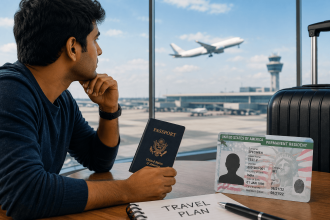
In 2026, the new US immigration rules include an advance parole travel change for certain individuals with pending Green Card applications (I-485) and others in high-risk categories. The Board of Immigration Appeals’ (BIA) decision (dated 13 August 2026) makes it riskier to travel outside the US on an Advance Parole. Traveling on an Advance Parole is now treated as a departure from the US and results in a 3-year or 10-year re-entry ban. Read more about the new advance parole travel rule and check whom it impacts.
Consular interview for minors at US embassies and consulates
There are some USCIS updates for minor visa applicants, from the newborn to the 17-year-old. The US Embassy in India clarified on 14 August 2026 that minor visa applicants must appear in person for consular interviews, regardless of age. If you are applying for a US visa even for an infant on lap, you must take the infant for the scheduled visa interview, as consular officers need to see every visa applicant in person, irrespective of age, during the interview process.
USCIS can reject incomplete applications without RFE
Among the new immigration rules 2026, the USCIS’ RFE policy has tightened for incomplete applications. Your immigration application or petition is now at the mercy of the officers who are given more discretionary power to reject incomplete applications without issuing a Request for Evidence (RFE) or Notice of Intent to Deny (NOID). This USCIS update applies to pending or filed applications, effective 5 August 2026. The officers may still issue RFEs whenever they think it is appropriate. Even if an RFE is issued, it would come with a tight response deadline unlike the previous 12-week window.
Before filing, make sure you:
- Submit all required forms
- Include the required initial evidence
- Provide supporting documents that establish eligibility
- Use the updated edition of forms and signatures
CBP’s 10-day email alert to US visitors
Among the new changes in US immigration 2026, CBP’s 10-day email warning is a reminder to foreign visitors and travelers about their remaining days of authorized stay in USA. It aims to prevent them from overstaying the visa and accruing days of unlawful presence in the US. The CBP 10-day heads-up currently targets B1/B2 visitors and those who enter America under the Visa Waiver Program (VWP). It will gradually expand to other temporary visa categories, including F, J, H-1B, and H2, in the coming days.
Additional L1 and H1B extension fees for US employers
Starting 9 September 2026, H1B and L-1 visa extension petitions will cost US employers more. The Department of Homeland Security has added the 9/11 response and biometric entry-exit fee (Public Law 114-113 Fee) to certain US employers filing renewal petitions for their L-1 and H1B employees. In addition to the regular USCIS filing fees, qualifying employers must pay an extra $4500 for L-1 visa extensions and an extra $4000 for H1B visa renewals.
Public Charge 2026 rule for Green Card applicants
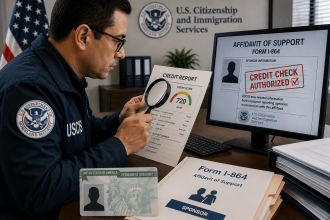
Replacing the relaxed Biden-era public charge rule, the Trump administration brought back a stricter public charge test against Green Card applicants. Effective 18 September 2026, the public charge test would help USCIS officers assess whether non-citizen immigrants are likely to depend on public benefits in the future and their eligibility for a Green Card. This US immigration 2026 policy would authorize USCIS officers to deny Green Cards if the applicant is deemed to use government resources like food stamps, Medicaid, and housing vouchers.
USA seeks to restrict refundable tax credits
In a new move, the US government is seeking to tighten refundable tax credit rules by reviewing non-citizen immigrants’ eligibility criteria. The Department of Treasury and the Internal Revenue Service (IRS) proposed regulations to enforce the Personal Responsibility and Work Opportunity Reconciliation Act of 1996 (PRWORA) – which states that any refundable portion of individual income tax credits is considered a federal public benefit. If this proposed regulation becomes a law, US work visa holders would face “Public Charge Rule” and consequently lose Green Card eligibility for claiming this federal public benefit.
Child Tax Credit (CTC), Earned Income Tax Credit (EITC), American Opportunity Tax Credit (AOTC), and the Adoption Tax Credit are the four major federal tax credits with high likelihood of being restricted to aliens. It aims to strengthen the federal tax system for Americans and mitigate the abuse by illegal non-immigrants and ineligible aliens.
We strive to keep our customers up-to-date on US immigration and international travel through Travel Beats. Sign up to Travel Beats, the Indian Eagle blog, for the latest travel news, airlines updates, discount offers, immigrant success stories, and a lot more. Indian Eagle is a trusted air-ticketing partner of major airlines and a travel-booking partner of Indians in America.