
You may end up checking in your carry-on bags for international flights departing from US airports. The new TSA CT scanners, which are rolling out across the US for nearly $800 million, may send overstuffed and/or oversized carry-on bags back to airline check-in counters. Since not all carry-on items go through 3D CT scanners, passengers should either leave them behind or check in them with the airline.
TSA Security Screening: CT Scanners vs Old X-ray Machines
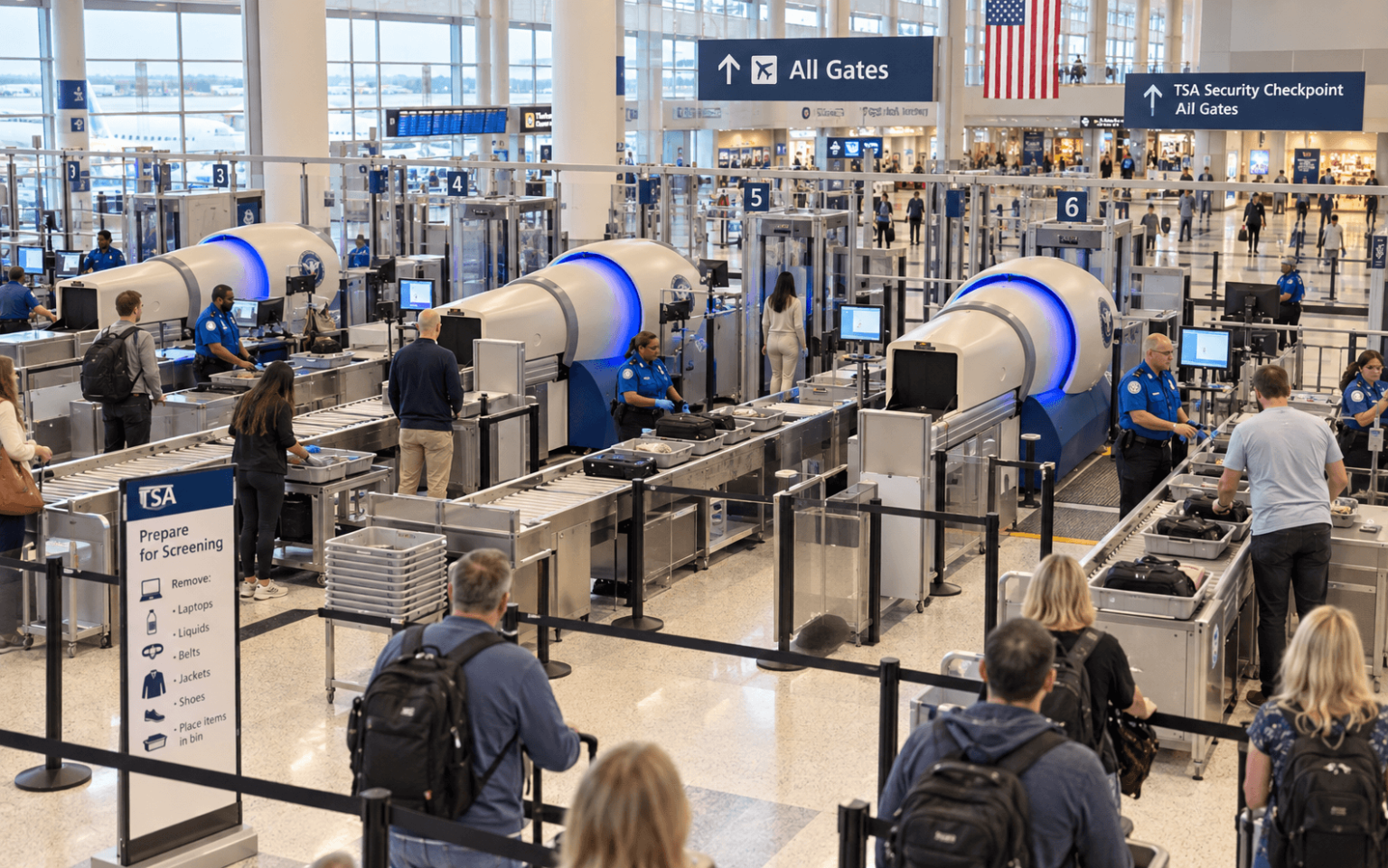
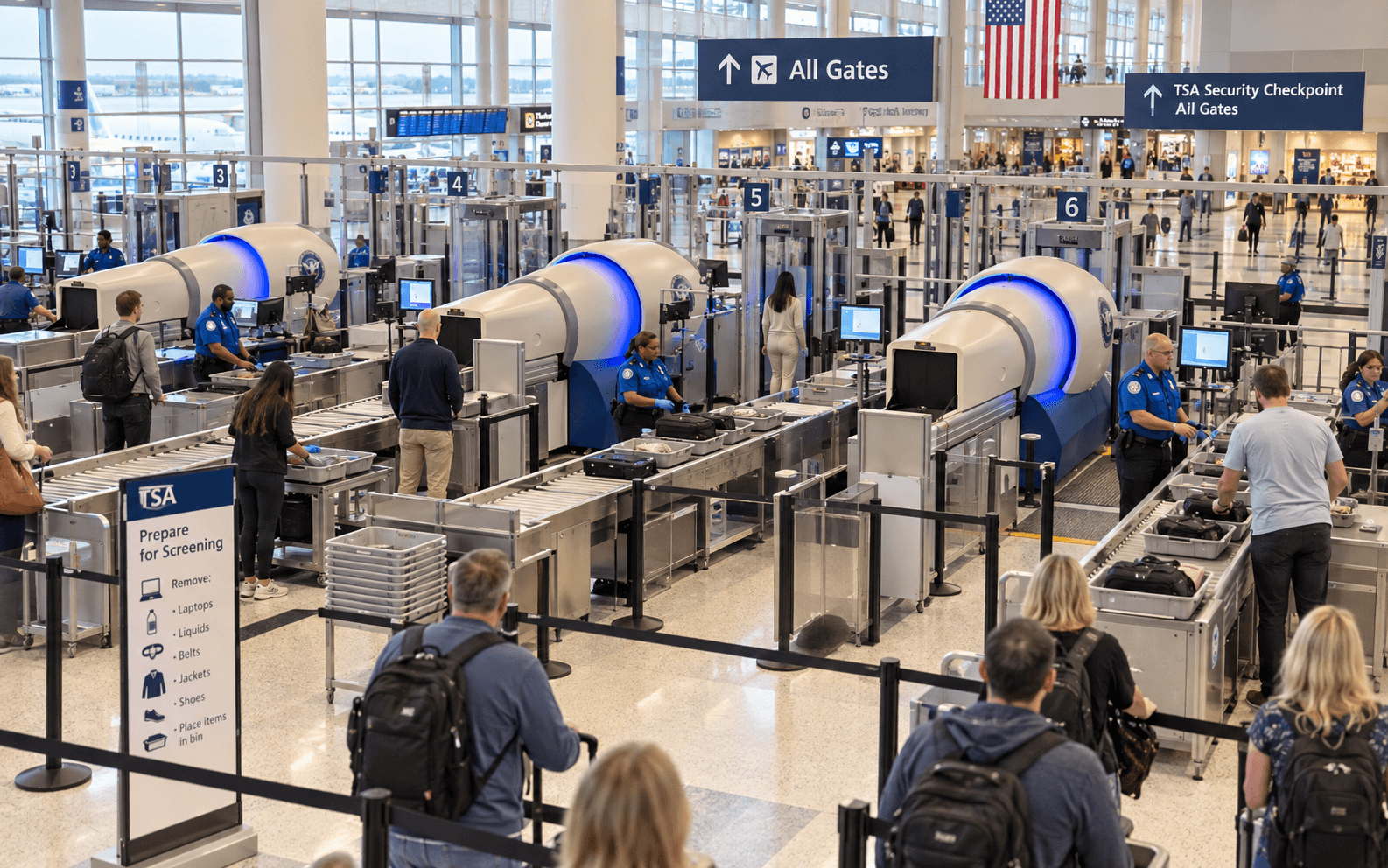
Nearly 300 airports in the US have installed 1200 CT scanners and replaced the old X-ray machines from TSA security lanes, as of mid-2026. Daniel Velez, a TSA spokesperson in Florida, confirmed that not all carry-on bags fit through the new advanced scanners (Computed tomography), because the tunnel opening is smaller than opening of the previous machines.
The rollout of TSA’s new CT scanners is a significant upgrade to US airport security and aviation safety. Unlike traditional luggage X-ray machines, CT scanners provide fool-proof screening of items within carry-on bags. Airport security checkpoints with the new TSA scanner don’t require you to unbag 3:1:1 liquids, laptops and other electronic devices. This sort of convenience was long overdue for passengers who arrive late for a flight or get stuck in a long line.
The only disadvantage of 3D luggage scanners at the US airports is their smaller opening, 24.5 inches (width) by 16.5 inches (height). It nearly blocks the tunnel opening for bulky carry-on items, oversized cabin bags, and bags with bulging outer compartments, requiring them to be checked. Computed Tomography scanners can accommodate and screen cabin luggage with standard dimensions (22 x 15 x 9 inches) for international flights.
International Airlines’ Carry-on Luggage Dimensions
Knowing airlines’ cabin baggage sizes for international passengers helps avoid last-minute hassles, given airports and airlines’ growing reliance on automated bag sizer and digital scanners for carry-ons. These days, wheels and handles strictly count towards bag sizes. Gate agents are flagging cabin luggage whose wheels, pockets, and/or handles exceed the acceptable size limits.
- Air Canada: 21.5 x 15.7 x 9 inches
- Air France: 46.5 inches (L+W+H)
- Air India: 21 x 15 x 7 inches
- Air New Zealand: 22 x 14 x 9 inches
- British Airways: 22 × 18 × 10 inches
- KLM: 21.5 x 13.5 x 10 inches
- Lufthansa: 21.7 x 15.7 x 9
- Korean Air: 21.7 x 15.7 x 7.9
- Philippines Airlines: 22 x 14 x 9 inches
- Virgin Atlantic: 22 x 14 x 9 inches
- Thai Airways: 22 x 18 x 10
- Singapore Airlines: 45.3 inches (L+W+H)
- Emirates: 21.65 x 14.96 x 8.66 inches
What if Your Carry-on Bag does not Fit a TSA CT Scanner
According to the TSA guidelines, standby officers may offer to inspect your bag manually, or redirect you to the lane where an older X-ray machine is still operating. In the worst case, you have no choice other than checking it in at an additional cost, as per the airline’s paid checked baggage fees depending on your travel class, fare type, and route. The third or the last option has become a common incidence at the CT-equipped TSA checkpoints, according to several reports.
Also, heading back to the airline counter and going through the baggage check-in process may eat into your boarding time.
Major US Airports with TSA’s 3D CT scanners
- Hartsfield-Jackson Atlanta Airport, ATL
- Boston Logan Airport, BOS
- Chicago O’Hare Airport, ORD
- Dallas Fort Worth Airport, DFW
- Los Angeles Airport, LAX
- New York JFK Airport
- Newark Liberty Airport, EWR
- Washington Dulles Airport, IAD
- Phoenix Sky Harbor Airport, PHX
- Indianapolis Airport, IND
- Detroit Metropolitan Airport, DTW
- Miami International Airport, MIA
- Seattle Tacoma Airport, SEA
- Raleigh-Durham Airport, RDU
- Charlotte Douglas Airport, CLT
- San Francisco Airport, SFO
- Philadelphia Airport, PHL
How TSA’s New CT Scanners Work
3D CT scanners are designed with a comparatively small tunnel mouth to deliver optimal performance, said Daniel Velez, a TSA spokesperson. They leverage advanced imaging technology to detect the shape and fathom the density of items packed in carry-ons, enabling TSA officers to see through the items. Unlike the older X-ray machines, this newer technology generates hundreds of images from different angles to project rotating 3D models of cabin bags’ content on the security officer’s screen. Some of the benefits of using CT scanners in TSA security lanes:
- Threat detection with greater accuracy
- Faster security screening process
- No removal of fluids and electronic items
- Reduced physical inspection of carry-ons
- Reduced hassles and frustration to travelers